Magnetic-Abrasive Powders
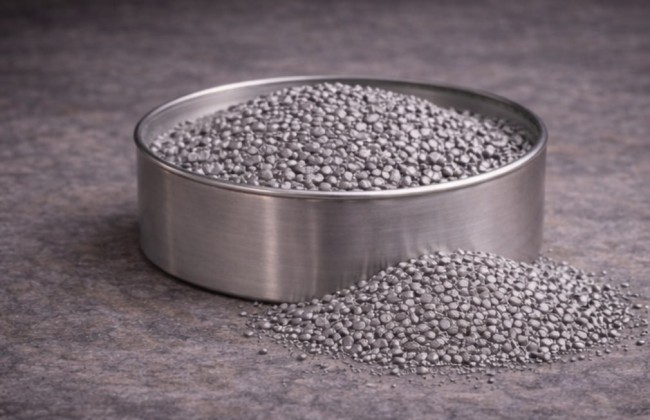
Magnetic-abrasive powders are specialized composition materials which consist of ferromagnetic parts and abrasive grains (diamond powders, cubic boron nitride (CBN), carbides, oxides and other super hard materials). A combination magnetic and abrasive property provides manage forming of the working area and stability of the processing process.
Magnetic-abrasive processing it is modern technology of finishing processing of surfaces where under effect of magnetic field the powder forming flexible abrasive tool. Such tool provides cleaning, polishing, deburring, elimination of micro defects and improving micro geometric surfaces of details including complicated or super complicated shapes.
Abrasive grains are in the free state in processing and their movement and interaction with surface managed by electromagnetic field energy. The cutting is carried out by giving the powder particles kinetic energy relative to the products which is carried out by giving kinetic energy to powder particles relative to products that are at rest, vibrate or move at a constant speed.
The effectiveness of magnetic abrasive processing is defined by two interrelated technological parameters:
-pressure of magnetic -abrasive powders on the surface of a blank;
-the speed of relative movement of powder particles and the treated surface.
Key advantages:
- comprehensive finishing - cleaning, polishing, deburring and improving microroughness in one operation;
- high accuracy - stable achievement of specified roughness and geometry parameters;
processing of complicated surfaces, inner cavity, holes, channels, gears and hard-to-reach zones;
-equable microgeometry and the possibility of obtaining a mirror shine;
- technological versatility - application for a wide range of materials;
- cost-effectiveness - reduction of processing time, reduction of the number of repeated operations and optimization of production costs;
- possibility of automation - integration into modern automated production lines.
Areas of application:
- precision mechanics - parts of engines, turbines, hydraulic cylinders, nozzles, tools;
- aviation and aerospace industry - components with increased requirements for accuracy and reliability;
- medical industry - polishing of implants and surgical instruments;
- instrumentation and electronics - high-precision functional components;
- surface restoration - elimination of microdefects, shape correction and improvement of operational characteristics of parts.